
Bring back soft boys
Watching Louis Theroux’s Manosphere as a therapist, and thinking about the tragedy of the Hard Man.

‘I don’t believe in depression’ the young man said, moments before he choked back tears after talking about the death of his brother, who had taken his own life.
You can see the pain he’s not allowed to feel etched into his face. Don’t you crave softness, I want to ask him? Is it not exhausting being this strong? Don’t you long for the arms of another to collapse into, to be held up by?
Collapsing, of course, is the opposite of what they’re permitted to do. Watching Louis Theroux’s documentary about the online manosphere, I kept noticing the same contradiction, the men insisting that they were fine, that nothing had hurt them, while clearly being so obviously angry and afraid and hurt.
But instead of hurting, they had to hustle, get on with it, be the driver of their success. The sentiment is meant to sound motivating, encouraging them to take charge of their lives rather than stew in their own suffering, and I get it. We don’t want to encourage anyone to become victims, to give in to depression, to roll over and give up. But what if you are a victim? A victim of a society that has told you over and over again that you are not allowed to be soft. Because ignoring the suffering altogether in something different. Sometimes you have to let yourself suffer to move on at all.
I once went to a retreat that turned into an incredibly emotional experience. By the end of the weekend, the women were like sisters, giggling, crying, holding each other. We lay on the sofa, legs entwined, comfortable, intimate, soft. We looked over at some of the men as they started to say their goodbyes. They stood awkwardly, making small talk about the weather, which motorways each of them was taking to get home, as if they hadn’t just been cracked open, hadn’t just bared their soul to one another. One of the women sighed. ‘My God, she said, ‘It’s hard to be a man.’
It was one of the first times I’ve felt truly grateful to be a woman, and truly sorry for men. Because probably, they too were craving softness, they just didn’t know how to ask for it, didn’t know how to draw it out of each other.
It’s not surprising that men tend to feel so much more able to open up to women. Research by Self Space found that 74% of men are more likely to talk about their mental health with women than with other men.
I’ve noticed this very statistic in my male friends. I’ll be having a deeper conversation with a man, they might be saying something intimate or vulnerable, and then another man will come along and their whole demeanour changes, they make a joke or change the subject, hasten back to the safety of the surface. It’s striking that, for all the resentment directed toward women in these spaces, many men seem to need the presence of a woman in order to access their own vulnerability. How terrible not to feel safe enough to relax, to let yourself out, to always have to stay hard and strong. able to relax, to soften.
Despite what society tells us about men and emotions and relationships, they crave all the same things we do - intimacy, connection, closeness, safety. It must feel so scary and isolating to be so far away from those things, so far away that you can’t even admit to yourself that you need them.
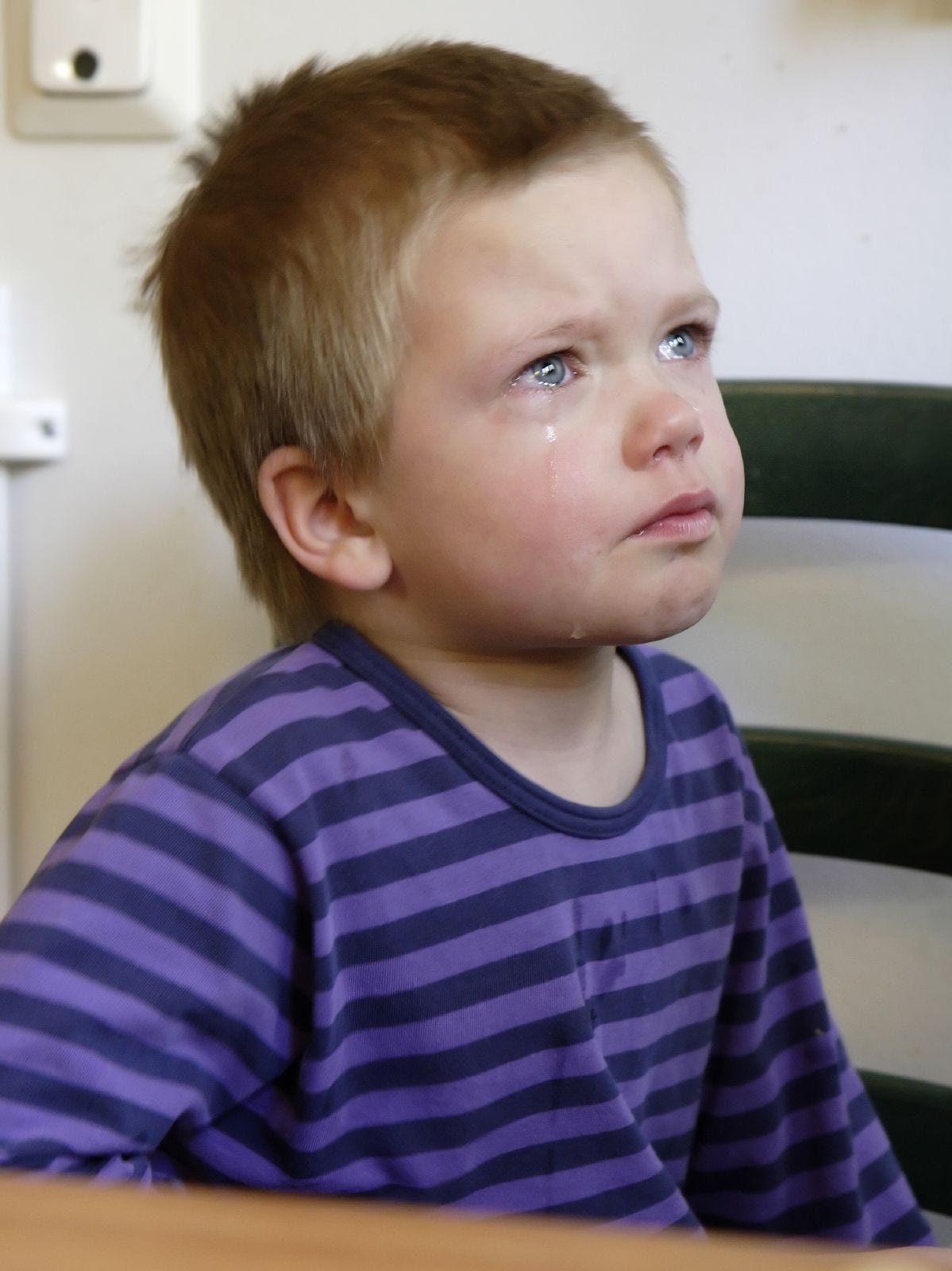
As women, we can be angry and hurt by the way that men are talking, and so we should be, but my god, I feel for them too. Because under all their ‘strength’, their gym workouts and trading tips and cries to ‘become high value men’, underneath, there are terribly hurt little boys, probably crying out for something gentle, for love, for softness. But not knowing how to get it.
Of course, people will always find clever avenues to repress their pain. We’ve done this long before the manosphere, and we’ll do it long after. But we were getting somewhere, weren’t we? We were talking more openly about mental health, speaking honestly about depression, suicide, trauma, and encouraging each other to face our feelings instead of burying them. And now, men are being taught the exact opposite, and are going to have to shed the problematic messaging once again, that men cannot be vulnerable, that they’re not allowed to ask for and receive the softness they so require.
It’s enraging to watch this movement unfold as a woman, and I feel scared for the young girls who are going to become subject to misogyny and objectification and sexual assault because of it. They, too, have new problematic messaging to shed. But at least they can be soft. At least they can go to each other and break down with the weight of it all.
At least they can hold each other as they do it.
But for men, they must continue in this world of hardness. In which systems have failed them and they have been mobilised into rage and hate, with nowhere to turn other than these hard men who offer them practical solutions for their problems, but absolutely nothing for their hearts. Because a world where men are cut off from softness is a world where they are cut off from love, cut off from each other. And that is a lonely world to live in, one that impoverishes us all.
This is the thing. The person who can't stop proving how strong, how successful, how unbothered they are - that person isn't confident. They're protecting something fragile underneath. The hardness is a cast over a fracture. You don't treat a fracture by attacking the cast. You treat it by acknowledging what broke. The loudest person in the room is almost never the strongest. They're the one most afraid of being seen as weak. Genuine strength doesn't announce itself. It doesn't need to.
There’s something very real in what you’ve named here.
It feels like you’re pointing to the cost of having no access to softness, and how that doesn’t remove feeling, it just changes how it shows up, often as anger, withdrawal, or pressure to stay in control.
What I keep noticing is that it’s not only about permission to feel, but about what happens when people don’t have a clear sense of who they are or where they locate their value. In that kind of disorientation, control, dominance, or self-sufficiency can start to feel like something stable to hold onto.
Without a structure that can actually hold what comes up, softness can feel exposing rather than relieving, especially in environments where there isn’t a shared way to meet it.
And in that sense, what looks like hardness is sometimes less a rejection of vulnerability, and more a way of managing something that doesn’t yet have a place to go.
It’s a difficult place to be, on all sides of it.